16 September 2026
East Herts Parking Discounts Could Depend on Vehicle Emissions
East Herts Council is exploring emissions-based parking charges that could mean lower-emission vehicles receive cheaper parking while higher-emission vehicles pay more. A Reform UK councillor has questioned whether the approach would be socially fair, while council consultation responses have also raised concerns about the affordability of replacing older vehicles.
Drivers Question East Herts Plans for Emissions-Based Parking Charges
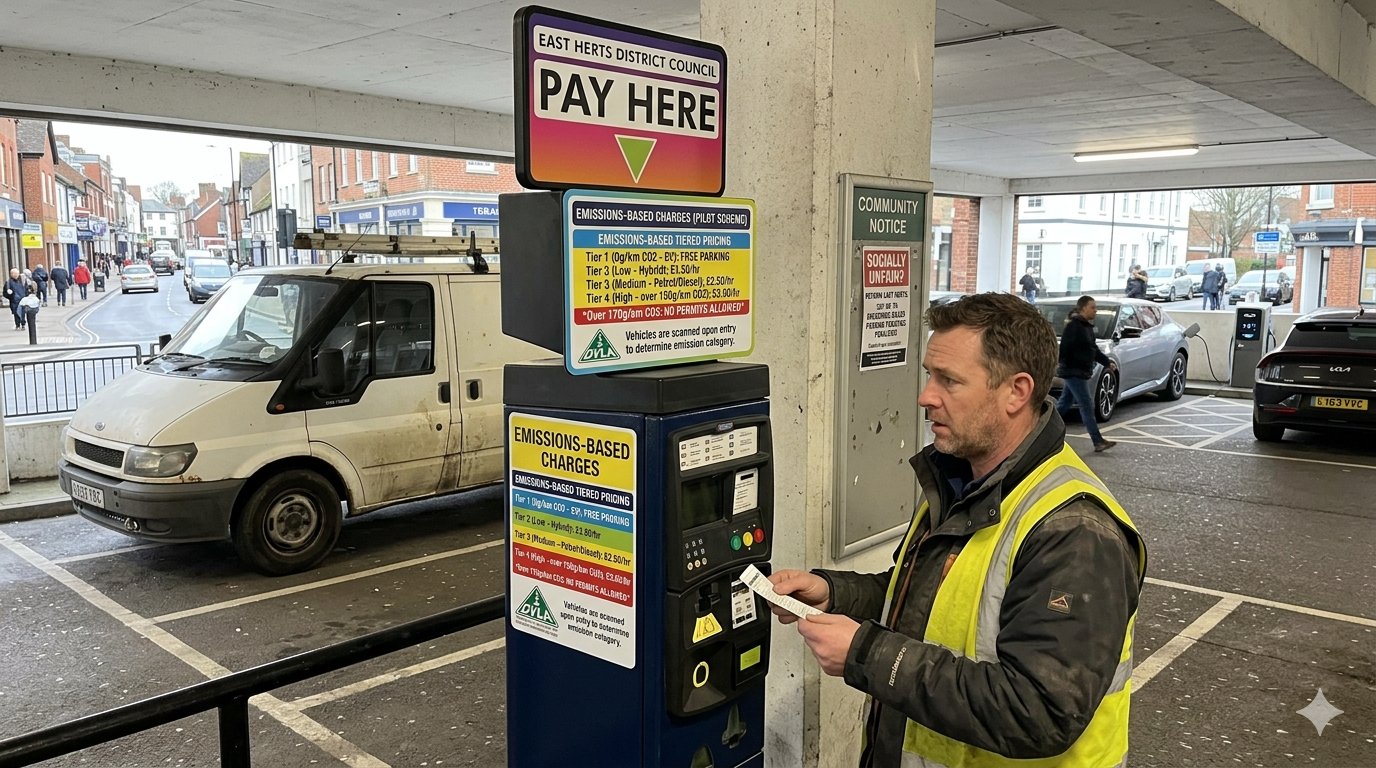
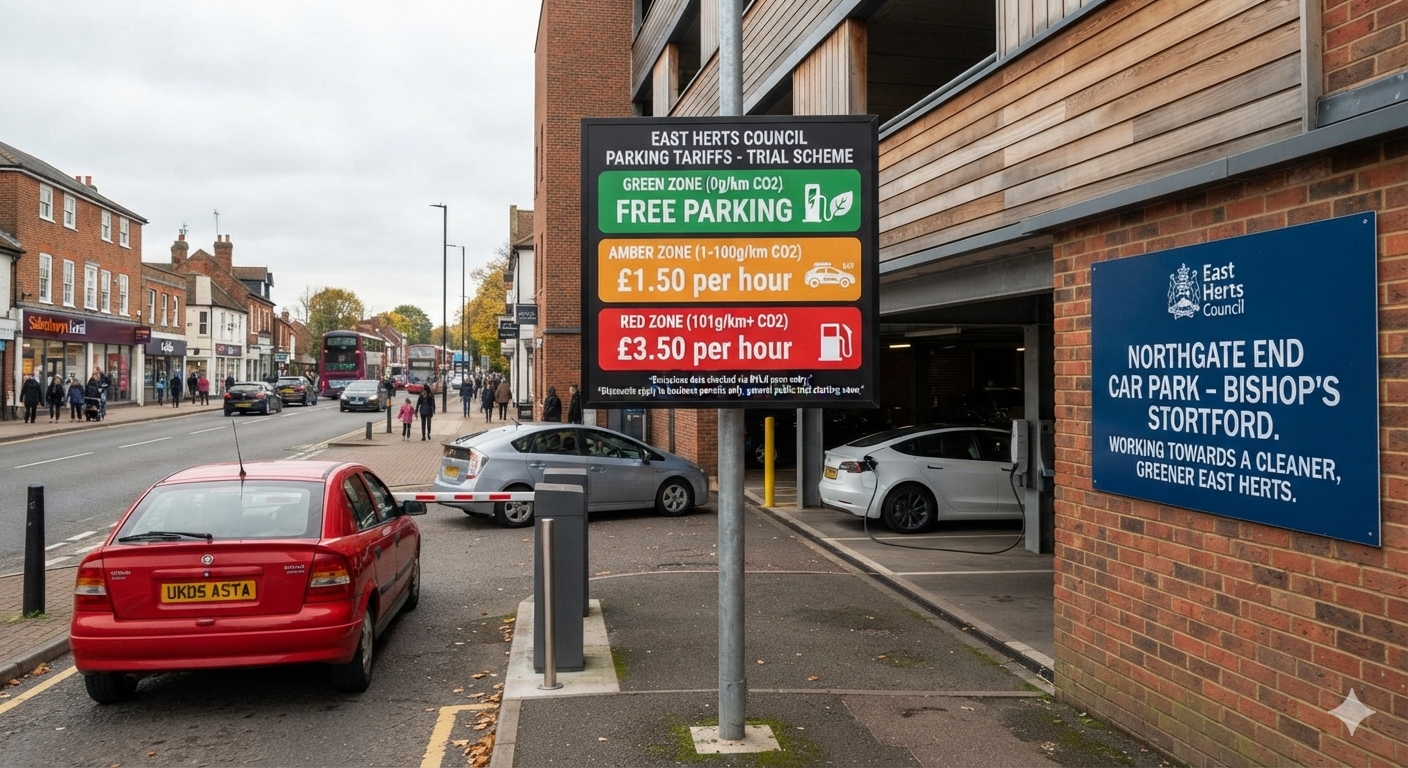
East Herts Parking Discounts Could Be Based on Vehicle Emissions Drivers in East Herts could see parking charges linked to their vehicle’s emissions under plans being explored by the council, prompting criticism from a Reform UK councillor who has questioned whether the approach would be socially fair. The proposal would allow vehicles with lower carbon dioxide emissions to receive cheaper parking charges, while higher-emission vehicles could face higher costs. East Herts District Council has included emissions-based parking within its longer-term parking strategy. The council says it will explore whether a system could be introduced for parking permits or council car parks. The strategy says the approach could encourage residents to switch towards lower-emission vehicles and support the council’s wider environmental and transport objectives. However, the proposal has raised concerns over how such a system could affect drivers who cannot afford to replace their existing vehicle. That affordability issue has already featured in feedback gathered by the council. Its consultation report recorded concerns that emissions-based charges or electric vehicle discounts could have a greater impact on people who are unable to afford an EV. The council's earlier proposal specifically considered different permit charges based on vehicle emissions, including a lower charge for electric vehicles or discounts for EVs in council car parks. Under the suggested approach, vehicles would be placed into different pricing bands according to their CO2 emissions, measured in grams per kilometre. East Herts has also considered the possibility of a diesel surcharge. The council's parking strategy says this could apply to diesel vehicles generally or potentially to older or more polluting diesel vehicles. The strategy does not mean that every driver will immediately face emissions-based parking charges. Instead, the council has said it will explore the viability of such a system. It also recognises affordability as a concern and says a phased approach or trial could be investigated before any wider implementation. For drivers, the issue could become particularly important when renewing parking permits or using council-managed car parks if emissions-based pricing is eventually introduced. The debate comes as East Herts has already made a number of changes to its parking arrangements. From April 2026, tariffs increased across urban car parks, while changes were also introduced to operating hours, maximum stays and Blue Badge parking arrangements. East Herts has also moved towards giving drivers more choice when paying for parking, with the council joining the National Parking Platform so that several parking apps can be used across its car parks. For now, emissions-based parking remains part of the council's longer-term strategy rather than an immediate change to every parking tariff. Drivers would need to wait for any further consultation, trial or formal decision before knowing how such a system could affect them. The issue nevertheless highlights a growing question for local authorities: how to use parking charges to encourage cleaner vehicles without placing additional financial pressure on motorists who may not be in a position to change their car. What could emissions-based parking mean for drivers? If East Herts eventually introduces emissions-based parking, the amount a driver pays could depend partly on the vehicle they use rather than simply where and how long they park. The council's existing strategy indicates that higher-emission vehicles could pay more, while lower-emission vehicles could receive a financial incentive through reduced parking charges. No final emissions-based tariff has been announced in the material available, so drivers should not assume that current parking prices or permits are being changed on that basis yet.
Share this story